

Plumbing has come to Butler County
We handle water heaters, drains, leaks and sewer lines in Butler County, Ohio. Our plumbers are licensed in Ohio, license #13557. Most calls get handled the same day, and someone answers the emergency line at any hour.
The same team you trust with your furnace now handles water heaters, drains, leaks, and sump pumps — with the same upfront pricing.
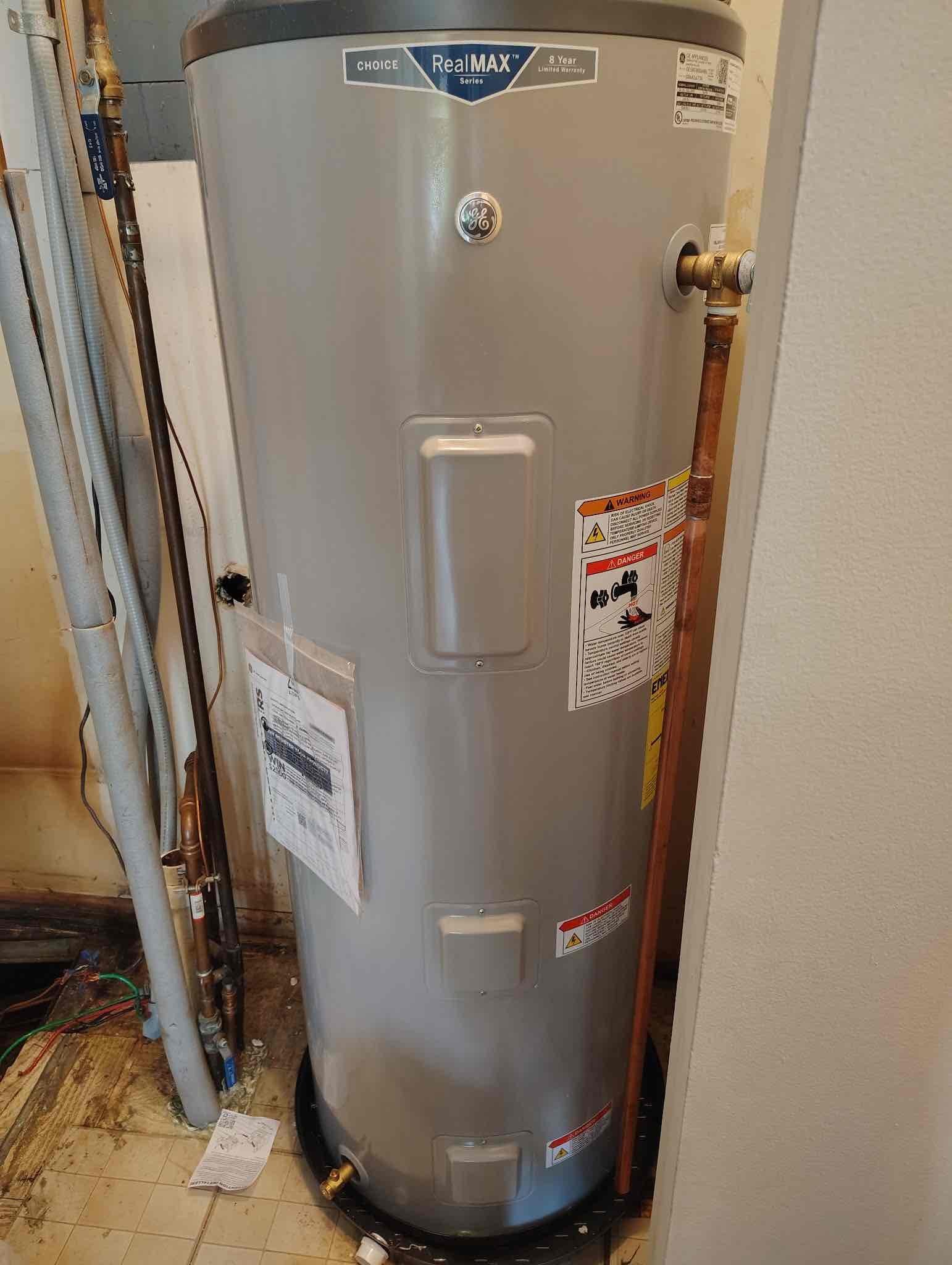
From the water heater to the sewer line.
Which pipes actually freeze, and what stops it?
The ones on exterior walls, in crawl spaces, in unheated garages, and the hose bibs outside. A pipe rarely bursts where it froze; the ice blocks the line and the pressure builds between that block and a closed tap, so the split happens somewhere else entirely. On a hard freeze, open the cabinet doors under sinks on outside walls and let a pencil-width trickle run from the furthest tap. Disconnect hoses in autumn, because a hose left on a bib is the single most common frozen-pipe call we take.
Is the water here hard enough to matter?
Yes, across most of this area, and it is the reason so many water heaters fail early around here. Hard water leaves scale on the heating element and in the tank bottom, which insulates the burner from the water and makes the heater work longer for the same hot shower. You see it first on fixtures and glassware, then in a heater that takes longer to recover. Softening is worth pricing on its own merits, but the honest first step is finding out your actual grains per gallon rather than assuming, because it varies by supplier and some of them changed in the last few years.
Why does a plumber care about my outside taps and irrigation?
Because of backflow. If pressure in the main drops, water can be pulled backwards out of a hose left in a pool, a bucket, or an irrigation line, and into the drinking water. That is why hose bibs have vacuum breakers and why irrigation systems need a backflow device, and why some of them are required to be tested. It is not a sales conversation, it is a code one, and it is worth knowing what you have before a home sale puts it on someone's list.
How do I know the sump pump will work when I need it?
Test it rather than trusting it, because a sump pump sits idle for months and then has one job. Pour a bucket of water into the pit slowly and watch: the float should rise, the pump should start, the water should drop, and it should shut off cleanly without chattering. Do that in early spring and again before winter. The two failures worth planning for are a stuck float, which is cheap, and a power cut during the storm that needed the pump, which is what battery backup exists for.