

Plumbing has come to Riverside
We handle water heaters, drains, leaks and sewer lines in Riverside, Ohio. Our plumbers are licensed in Ohio, license #13557. Most calls get handled the same day, and someone answers the emergency line at any hour.
The same team you trust with your furnace now handles water heaters, drains, leaks, and sump pumps — with the same upfront pricing.
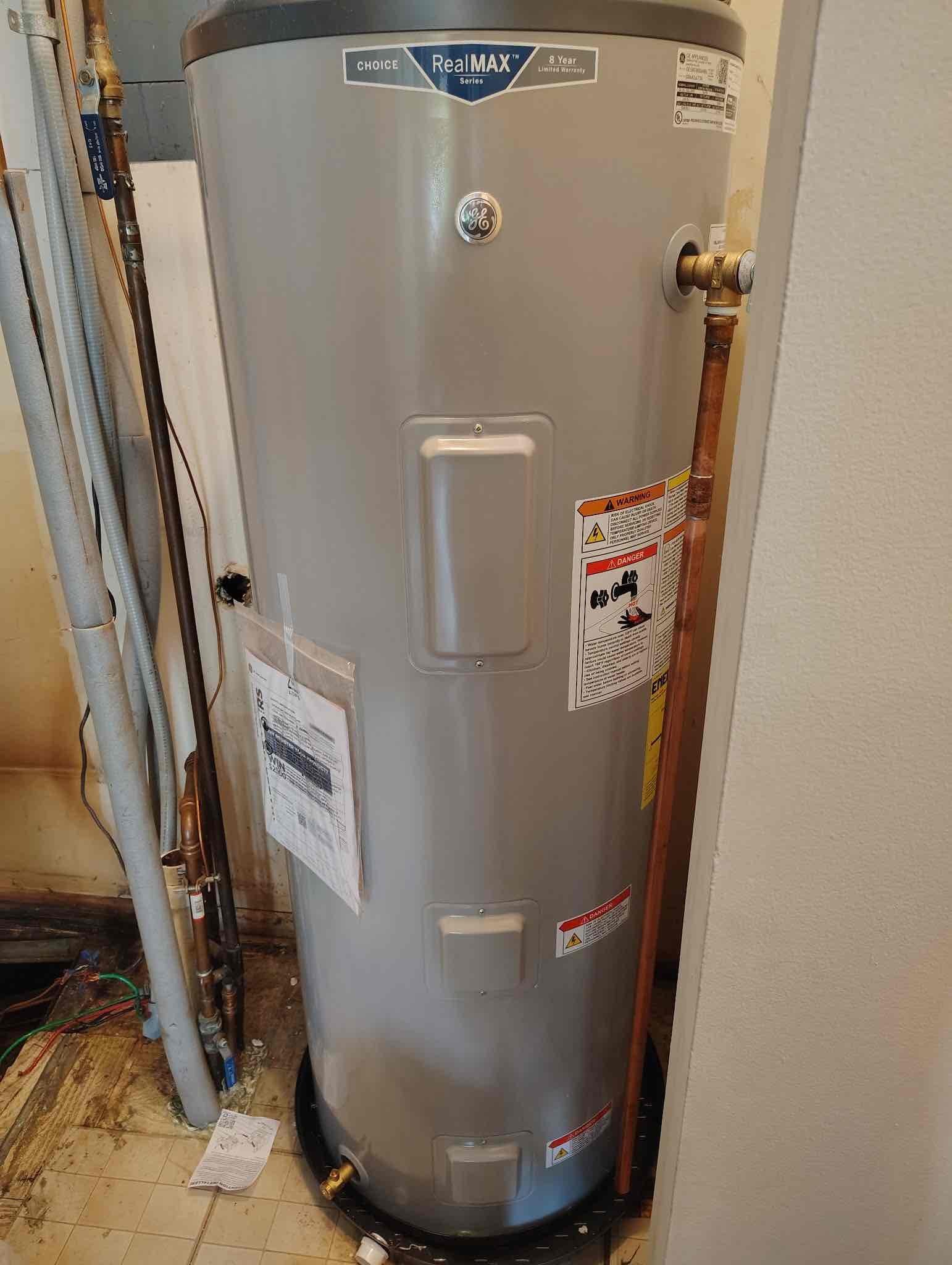
From the water heater to the sewer line.
Is a tankless water heater worth it?
It depends on the house more than on the technology. Tankless gives you hot water that does not run out and takes up far less room, and it lasts longer than a tank. Against that, it usually needs a larger gas line and different venting, so the install is a bigger job than a straight tank swap. It also wants descaling on a schedule in water as hard as ours, and skipping that is how people end up disappointed. If you are replacing in an emergency with no hot water in the house, a tank is usually the faster answer.
How do I know the sump pump will work when I need it?
Test it rather than trusting it, because a sump pump sits idle for months and then has one job. Pour a bucket of water into the pit slowly and watch: the float should rise, the pump should start, the water should drop, and it should shut off cleanly without chattering. Do that in early spring and again before winter. The two failures worth planning for are a stuck float, which is cheap, and a power cut during the storm that needed the pump, which is what battery backup exists for.
How long should a water heater last?
Eight to twelve years on a tank, longer on a tankless. What matters more than the number is how it fails: a heater at the end of its life usually goes by leaking from the tank itself, and a tank leak is not repairable. That is why it is worth knowing the age before it happens. The date is in the serial number on the label, and a photo of that label is a two-minute job that turns a future emergency into a planned replacement. If yours is in a finished basement or over living space, plan earlier rather than later.
Can tree roots really get into a sewer line?
Routinely, and older neighborhoods see it most because the mature trees and the clay tile sewer lines arrived together. Roots do not break into a sound pipe. They find a joint that is already weeping and grow toward the water, then thicken until the line catches paper and grease. The signs are more than one fixture backing up at once, gurgling from a toilet when the washer drains, and a lawn that is greener in a line across the yard. Cutting them clears it; whether the line then needs lining or replacing is a camera question, not a phone one.