

Plumbing has come to Springfield
We handle water heaters, drains, leaks and sewer lines in Springfield, Ohio. Our plumbers are licensed in Ohio, license #13557. Most calls get handled the same day, and someone answers the emergency line at any hour.
The same team you trust with your furnace now handles water heaters, drains, leaks, and sump pumps — with the same upfront pricing.
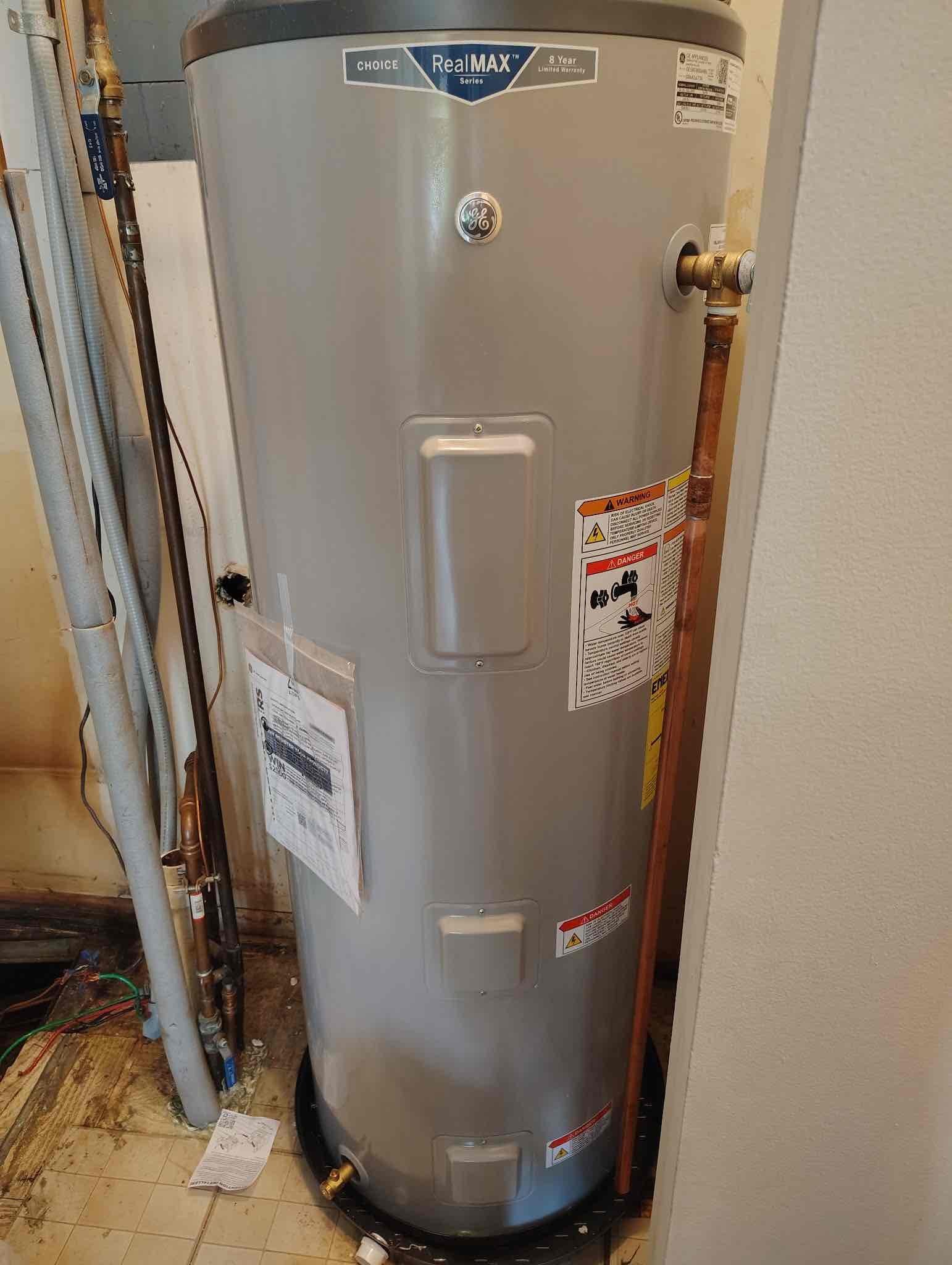
From the water heater to the sewer line.
We are remodeling. When should the plumber be involved?
Earlier than most people ask. Once a wall is open you can see what is behind it, and decisions about moving a stack, upsizing a supply run or replacing the last of the old pipe cost a fraction of what they cost after the drywall is back. It is also when permits and inspections are cheapest to handle, because they can be scheduled around the rest of the work rather than holding it up. A short conversation at the drawing stage tends to save arguments at the tiling stage.
The water pressure has dropped. Where do I start?
First work out whether it is the whole house or one fixture, because that splits the problem in half. One fixture is almost always an aerator or a cartridge, and both are small jobs. Whole house points at the pressure regulator, a partly closed main valve, or galvanized supply pipe that has corroded closed from the inside over decades. That last one is common in pre-war houses and it is progressive, so pressure that has been slowly falling for years is telling you something different from pressure that dropped last week.
How do I know the sump pump will work when I need it?
Test it rather than trusting it, because a sump pump sits idle for months and then has one job. Pour a bucket of water into the pit slowly and watch: the float should rise, the pump should start, the water should drop, and it should shut off cleanly without chattering. Do that in early spring and again before winter. The two failures worth planning for are a stuck float, which is cheap, and a power cut during the storm that needed the pump, which is what battery backup exists for.
A toilet that runs on and off by itself. Serious?
It is called phantom flushing and it means water is escaping from the tank into the bowl, so the fill valve keeps topping it up. The culprit is nearly always the flapper, which hardens with age and stops sealing, and it is one of the cheapest parts in the house. It is worth fixing quickly rather than living with, because it runs continuously and quietly, and a running toilet shows up on the water bill at a scale that surprises people who assumed it was just a noise.