

Plumbing has come to Vandalia
We handle water heaters, drains, leaks and sewer lines in Vandalia, Ohio. Our plumbers are licensed in Ohio, license #13557. Most calls get handled the same day, and someone answers the emergency line at any hour.
The same team you trust with your furnace now handles water heaters, drains, leaks, and sump pumps — with the same upfront pricing.
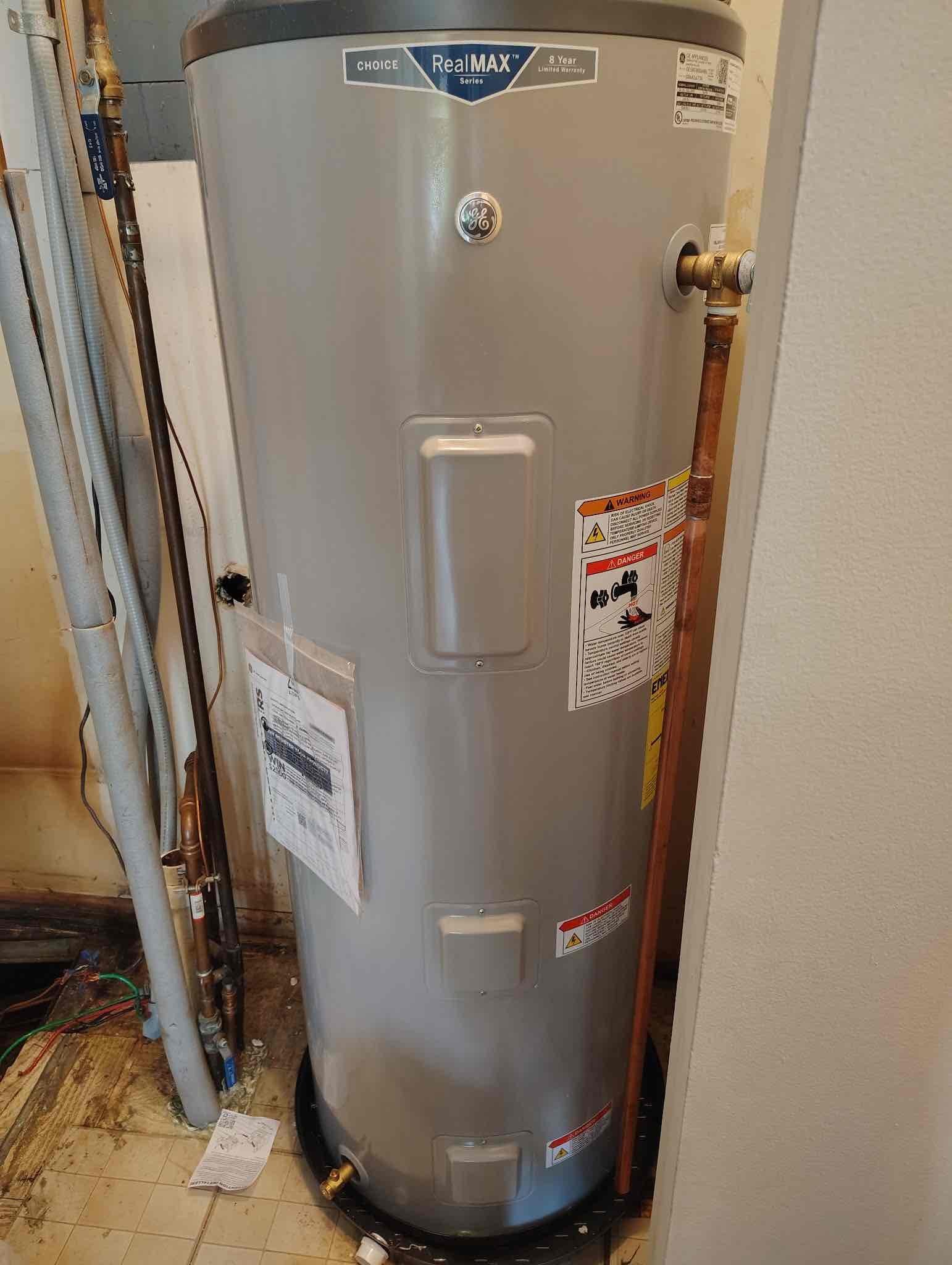
From the water heater to the sewer line.
What should I do if I smell gas?
Leave, then call from outside. Do not switch anything on or off, including lights, and do not use the phone indoors, because a switch contact is an ignition source. Once you are out, call the gas utility's emergency line first: they will come and make it safe at no charge, and they will do it faster than anyone else. Call us after that for the repair. This is the one plumbing situation where the right first call is not to a plumber, and anyone who tells you otherwise is wrong.
My house has old galvanized pipe. Does it all have to go?
Not necessarily all at once. Galvanized supply line rusts from the inside, so the bore narrows over decades until flow suffers and the water runs brown after the house has sat empty. Whether it wants full repiping or a partial depends on how much has already been replaced by previous owners, which is usually more than people expect. A look at the exposed runs in the basement tells you a lot for free. Where repiping is the right answer, it is worth doing before a remodel rather than after.
Can tree roots really get into a sewer line?
Routinely, and older neighborhoods see it most because the mature trees and the clay tile sewer lines arrived together. Roots do not break into a sound pipe. They find a joint that is already weeping and grow toward the water, then thicken until the line catches paper and grease. The signs are more than one fixture backing up at once, gurgling from a toilet when the washer drains, and a lawn that is greener in a line across the yard. Cutting them clears it; whether the line then needs lining or replacing is a camera question, not a phone one.
Which pipes actually freeze, and what stops it?
The ones on exterior walls, in crawl spaces, in unheated garages, and the hose bibs outside. A pipe rarely bursts where it froze; the ice blocks the line and the pressure builds between that block and a closed tap, so the split happens somewhere else entirely. On a hard freeze, open the cabinet doors under sinks on outside walls and let a pencil-width trickle run from the furthest tap. Disconnect hoses in autumn, because a hose left on a bib is the single most common frozen-pipe call we take.